
Blog
Cocamidopropyl betaine: why every good cleaner has a secondary surfactant

Ask a formulator why their dishwashing liquid uses three surfactants instead of one and the answer is almost always the same: the primary surfactant cleans, the secondary one makes the product usable. In most household cleaning formulations that secondary role belongs to cocamidopropyl betaine — CAPB.
What amphoteric means in practice
CAPB (CAS 61789-40-0) is amphoteric: it carries both a positive and a negative charge depending on the pH of the solution. That dual nature is the whole point. It lets CAPB sit alongside anionic surfactants such as LABSA and SLES without the incompatibility you would get from a cationic material, and it lets the same product work across a wide pH range.
The four things it does to a formulation
- Reduces irritation. CAPB forms mixed micelles with anionic surfactants, which lowers the amount of free anionic surfactant available to interact with skin. This is why hand dishwashing liquids that claim to be gentle almost always contain it.
- Boosts and stabilises foam. It does not generate much foam alone, but it makes the foam from SLES or LABSA denser and longer-lasting — the visual cue most consumers read as “strong”.
- Thickens. Combined with SLES and salt, CAPB lets you reach the viscosity consumers expect without adding a separate thickener.
- Improves tolerance to hard water. Useful in markets where water hardness varies by region.
CAPB 35 or CAPB 45?
The two commercial grades differ mainly in how much water you are paying to ship.
| Parameter | CAPB 35 | CAPB 45 |
|---|---|---|
| Active matter | 29 – 32% | 38 – 42% |
| Appearance | Light-yellow clear liquid | Colourless to light-yellow clear liquid |
| Colour | ≤ 200 APHA | ≤ 100 Hazen |
| pH | 5.0 – 7.0 | 4.0 – 6.0 (5% solution) |
| Sodium chloride | ≤ 6.0% | ≤ 7.0% |
| Free amine | ≤ 0.5% | ≤ 0.5% |
CAPB 45 carries roughly a third more active matter per drum, which matters when freight is a meaningful share of your landed cost. CAPB 35 is easier to pump in cold conditions and is often preferred where dosing equipment is simple. If you are recalculating a formula from one grade to the other, adjust on active matter, not on drum weight — this is the single most common costing error we see.
Two quality figures worth watching
Free amine. Residual amine is the main irritation risk in CAPB and the reason some markets scrutinise it. A specification of ≤0.5% is standard; ask for the batch result, which is typically lower.
Sodium chloride. Salt content affects how your formula thickens. If your viscosity drifts between batches of finished product and nothing else changed, the chloride figure in your CAPB is a good place to look.
A workable starting point
For a mid-market hand dishwashing liquid, formulators commonly build on SLES as the primary surfactant, add CAPB at a few percent active to carry foam and mildness, and use LABSA to bring the cost down where the market tolerates it. Fragrance is added last, at low dosage — see our fragrance range for cleaning products. Exact ratios depend on your target price point, water quality and local regulations, and should always be confirmed with bench trials.
Ordering
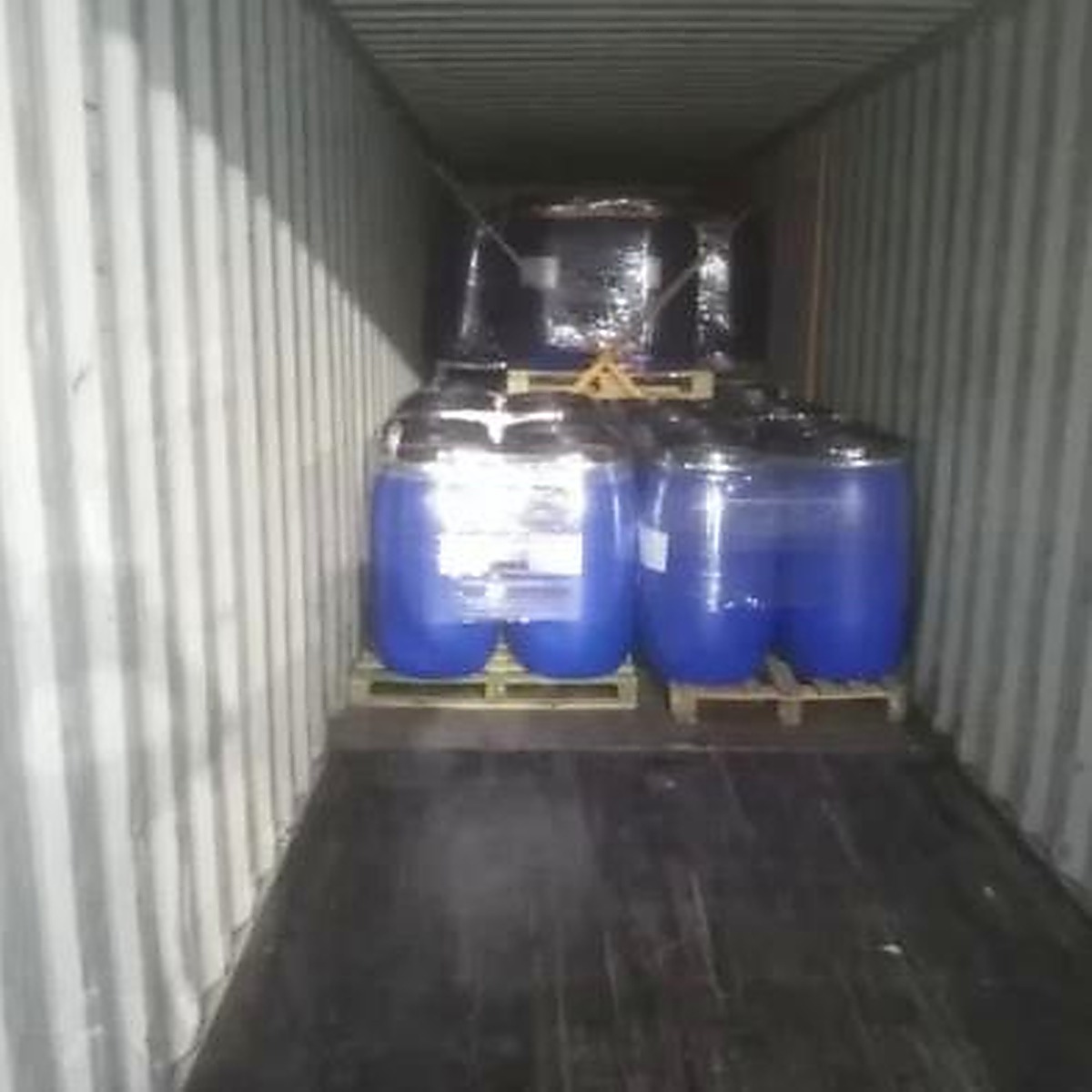
CAPB ships in 200 kg drums. When requesting a quote, specify the grade (35 or 45), the quantity in tonnes, and your destination port. If you are unsure which grade fits your line, tell us the active matter your formula needs and we will work back from there.
See the full chemicals and ingredients catalogue, or message us with your material list.